
Waking up with itchy bites is one of those things that can turn a normal week into a full on stress spiral. And honestly, it’s easy to see why: bed bug bites and flea bites can look very similar, and skin reactions vary a lot from person to person. Even within the same household, one person can be covered in bites while someone else barely reacts at all.
This guide will help you narrow it down using two things that are usually far more reliable than “what the bite looks like”: the pattern and the clues in your home. If you already suspect a pest issue and want a second pair of eyes, you can also check our Pests We Control page to see what we treat, or just get in touch and we’ll point you in the right direction.
First: bites alone are not a perfect ID
It would be lovely if bed bug bites looked one way and flea bites looked another, every time. In reality, it’s messy.
Your skin might react quickly, slowly, or barely at all. Bites can also be mistaken for dermatitis, heat rash, eczema flare ups, or even reactions to laundry detergent.
So, instead of obsessing over the bump itself, focus on:
- Where the bites appear on your body
- When you notice them (after sleep, after being on carpets, after handling pets)
- What else you can find around beds, sofas, carpets, and pet areas
Bed bug bites: the usual signs
What they tend to look like
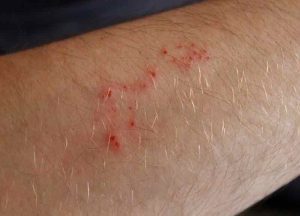 Bed bug bites often show up as itchy red bumps, sometimes raised, and they can
appear in lines or small clusters. People sometimes describe a “row” of bites, which happens because bed bugs may feed more than once while they’re moving.
Where they tend to show up
Because bed bugs feed while you sleep, bites are commonly on exposed skin: arms, hands, shoulders, neck, face, and lower legs. That said, it’s not a rule. If you sleep in a t shirt and shorts, you might notice bites mainly on arms and legs. If it’s cold and you’re fully covered, bites might be limited to hands and any skin not tucked in.
Timing clue
People often notice bed bug bites after sleeping, but reactions can be delayed. That delay is what makes it confusing. You might wake up fine and then notice bites later in the day, which leads people down the wrong path.
If you want more detail on bed bugs themselves (hiding spots, behaviour, and why they’re so persistent), you might find this useful: Bed Bugs: The Importance of Removing Them from Your Home.
Flea bites: the usual signs
What they tend to look like
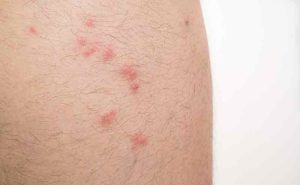 Flea bites are often small, itchy red spots or bumps, sometimes with a tiny central dot. They can come in clusters too, which is why relying on “clusters vs lines” can lead you astray.
Where they tend to show up
Fleas tend to bite lower down, especially around ankles and lower legs. If you’re sitting on a carpet, bean bag, or fabric sofa where fleas are present, you might also get bites on forearms or the back of your legs.
Lifestyle clue
Fleas are often associated with pets, but you can still get them without owning an animal. Previous occupants, visiting pets, shared hallways in flats, or wildlife in loft spaces can all play a part. If you do have pets, check whether they’ve been scratching more than usual and pay attention to their favourite sleeping spots.
For a service overview, have a look at our Flea Control Services page.
Quick comparison: bed bugs vs fleas
Here’s a practical “at a glance” comparison.
It’s not meant to be a diagnosis on its own, but it will usually point you in the right direction.
| Clue | More typical of bed bugs | More typical of fleas |
|---|---|---|
| Where bites appear | Exposed skin while sleeping (arms, shoulders, neck, face, legs) | Often ankles and lower legs; sometimes forearms after contact with fabrics or pets |
| When you notice them | After sleeping (though reactions can be delayed) | Any time, often after being on carpets or around pet bedding |
| Home evidence | Signs around mattress seams, headboards, bed frame, bedside furniture | Activity around pet areas, carpets, skirting edges, soft furnishings |
| Common “story” | Bites keep appearing after nights in the same room (or after travel and visitors) | Itchiness increases after pets have been somewhere or after time on carpets |
Look for proof in the home (this usually solves it)
If you do one thing after reading this post, do this: stop staring at your skin and start checking the environment.
The pest’s “fingerprints” around your home can be far more telling than the bites.
If you suspect bed bugs: where to check
- Mattress seams and piping (especially around corners)
- Headboard (front and back, plus wall fixings)
- Bed frame joints and slats
- Bedside furniture (drawers, back panels, screw holes)
- Sofas and armchairs if you nap there regularly
You may see tiny dark marks, shed skins, or small insects hiding in tight cracks.
If you suspect fleas: where to check
- Pet bedding and the floor around it
- Carpets (especially along skirting boards and under furniture)
- Sofas and soft chairs where pets sit
- Car interiors if pets travel in the car
Fleas can be hard to spot, but the pattern of itchiness often points to the areas where they’re active.
If you want a clearer idea of what professional treatment involves, our Flea Control Services page explains the process.
What to do today: quick bite relief
- Use a cool compress to calm the skin
- Consider over the counter antihistamines if appropriate for you
- Use a soothing anti itch cream (a pharmacist can advise)
- Try not to scratch to reduce the risk of infection
DIY steps that actually help
If you suspect bed bugs
- Wash and dry bedding on high heat where the fabric allows
- Bag up bedding and clothes before moving them through the house
- Vacuum mattress seams, bed frame joints, skirting edges, and empty the vacuum outside afterwards
- Reduce clutter around the bed so there are fewer hiding spots
If you suspect fleas
- Treat pets properly (pet treatment is often the missing link)
- Wash pet bedding on a hot wash if possible
- Vacuum thoroughly, especially edges of rooms and under furniture, and repeat over several days
- Repeat because the flea life cycle means “one clean” rarely finishes the job
When it’s time to call a professional
DIY can help in the early stages, but there’s a point where you’re just losing weekends to vacuuming and still getting bitten.
Professional help is usually the sensible move when:
- Bites keep appearing despite repeated cleaning
- You suspect the issue has spread beyond one room
- You cannot safely access key areas
- Someone in the home is vulnerable or reacting badly
- You want confirmation and a clear treatment plan rather than guesswork
If you’d like us to identify the likely cause and advise next steps, you can contact Your Pest Assassin. If you want a rough idea of costs before you call, see Pricing.
Mini FAQ
Can you get flea bites without having pets?
Yes. Pets are common carriers, but fleas can still be introduced via visitors, previous occupants, or wildlife.
Do bed bugs only live in beds?
No. Beds are a favourite because they’re close to a food source, but bed bugs can also hide in sofas, chairs, skirting gaps, and bedside furniture.
Why do only some people react?
Skin reactions differ. One person might swell and itch immediately, while another might show very little.
Final thought
Whether it’s bed bugs or fleas, most people’s first reaction is embarrassment. It shouldn’t be. These issues are common, and they’re not a reflection on cleanliness. The faster you identify what you’re dealing with, the faster you can get your home feeling normal again.
If you want help confirming the cause and putting a proper plan in place, explore our pest control services or get in touch.