
When Do Wasps Start Building Nests in the UK?
Many people only start thinking about wasps once summer arrives and activity becomes obvious, but nests usually begin much earlier in the year. In the UK, queen wasps emerge in spring as temperatures rise, then begin searching for sheltered places to start building a new nest. If you already suspect wasp activity around your property, professional wasp nest treatment can stop the problem before it becomes more difficult to deal with.
That early stage often goes unnoticed because the nest is still very small and there may only be a single queen present. By the time worker wasps emerge and numbers increase, the nest may already be well established inside a loft, wall cavity, shed, or roofline. That is why understanding when wasps start building nests can help you spot the warning signs much sooner.
When Do Wasps Start Building Nests?
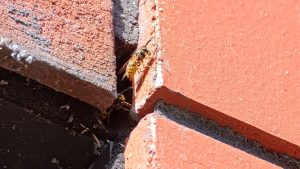 In most parts of the UK, wasps begin building nests in spring, usually from around April into May, although mild weather can trigger activity a little earlier. Queen wasps spend winter in hibernation, then emerge as conditions improve and begin the process of finding a suitable nesting site.
At this point, the queen starts building the first small section of the nest herself and lays the first eggs. A few weeks later, the first worker wasps emerge and take over nest building and food gathering, which is when activity tends to become more noticeable around homes and gardens.
Why Wasp Nest Season Starts Earlier Than People Think
Most people associate wasps with late summer, and that makes sense because that is when nests are larger and worker numbers are much higher. The problem is that by the time you are seeing regular wasp traffic around your property, the nest has often been developing quietly for weeks.
That early spring period is easy to miss. You may see one larger wasp around a loft hatch, roof edge, garage, or shed and assume it is just a random insect, when in reality it could be a queen exploring or starting a nest nearby. If you want an idea of likely treatment costs should that happen, you can also view our pest control pricing.
What Does an Early Wasp Nest Look Like?
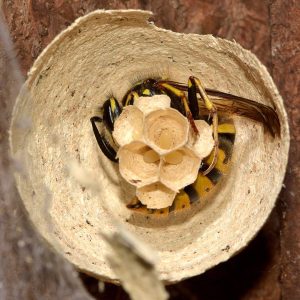 An early wasp nest is usually very small, often no bigger than a walnut or golf ball. It has a papery appearance because wasps create nests by chewing wood fibres and mixing them with saliva to form a pulp. In the beginning, the structure may be tucked away so neatly that it is only spotted by chance.
These starter nests are often found in quiet, sheltered locations where there is little disturbance. Common examples include under eaves, inside sheds, in loft spaces, behind cladding, or within wall voids. As the colony grows, the nest expands and the level of visible activity increases.
Common Places Wasps Start Building Nests Around the Home
Wasps usually choose places that are dry, sheltered, and protected from regular disturbance. Around UK homes, some of the most common nest locations include lofts, soffits, roof spaces, garages, sheds, wall cavities, air bricks, and garden structures.
If you are unsure whether activity around your property is normal or the start of a nest, our contact page is the quickest place to get advice, and you can also check the areas we cover if you want to know whether we attend your location.
Typical Wasp Nest Timeline in the UK
| Time of Year | What Usually Happens |
|---|---|
| March to May | Queen wasps emerge from hibernation and begin searching for nesting sites. |
| April to May | Small starter nests begin to appear in sheltered spots such as lofts, eaves, sheds, and wall spaces. |
| May to June | The first worker wasps emerge and activity becomes more noticeable. |
| Summer | The nest expands quickly and wasp numbers rise significantly. |
| Late Summer to Autumn | Wasp activity often peaks, and larger nests become far more disruptive around homes and businesses. |
Worth knowing: A nest can start small and stay almost invisible for a while. By the time activity looks obvious from outside, the colony may already be well established.
Signs a Wasp Nest May Be Starting
One of the earliest signs is seeing a single large wasp, often a queen, repeatedly around the same part of the property. You may also notice wasps entering and leaving a small gap under roof tiles, near soffits, or around vents. At first, the activity can seem minor, which is why people often ignore it until the nest is much busier.
Another clue is noticing activity in quiet upper parts of the home such as loft spaces or around outbuildings. If the same area keeps attracting wasps over several days, it is worth paying attention rather than assuming it will disappear on its own.
How Fast Does a Wasp Nest Grow?
Once the first workers emerge, nest development tends to speed up. The queen focuses on laying eggs while workers take over feeding larvae and expanding the nest. This is why what starts as a small spring issue can become a much more obvious summer problem in a relatively short space of time.
That does not mean every sighting leads to a major infestation, but it does mean early signs are worth taking seriously. If you are already dealing with persistent wasp traffic, our same day wasp nest treatment service is designed to deal with active nests safely and efficiently.
Should You Act Early?
In practice, early action is usually the sensible option. A small nest may still be out of sight, but the colony is only going to become more active as the weeks go on. Trying to disturb a nest yourself can make wasps defensive, especially once worker numbers build, so caution is important.
If you are unsure what you are seeing, it often makes more sense to get advice early rather than wait until the nest is larger, harder to access, or positioned close to doors, windows, rooflines, or outdoor seating areas.
Final Thoughts
Wasps in the UK usually start building nests in spring, often from April onwards, even though many people only notice the problem later in the year. The earliest stage can be easy to miss, but repeated wasp activity around the same area, especially in lofts, sheds, eaves, or wall spaces, can be an early warning sign.
If you think a nest may be starting around your home or business, take a look at our wasp nest treatment page, browse our pest control services, or get in touch for straightforward advice.