
A wasp nest in the loft is easy to put off. It is out of sight, the wasps may only appear near the eaves, and you might hope the problem will simply fade on its own.
The trouble is that loft nests sit close to living space, storage areas, wiring, insulation and access hatches. Ignoring one can turn a manageable pest issue into repeated wasp activity inside and around the home.
Why loft wasp nests are different
Wasps often choose sheltered, dry spaces where a colony can grow with little disturbance. A loft can suit them well because it is warm, protected from rain and usually quiet. Entry is often through small gaps around rooflines, eaves, vents, soffits or damaged exterior details.
That position matters. A nest in a garden hedge may be easier to avoid for a while, but a loft nest can put wasps close to bedrooms, bathrooms, landing lights and storage. If the nest is near a hatch, you may disturb it simply by checking boxes, reaching for decorations or opening the loft space for ventilation.
Lofts also make activity harder to judge. You may only notice a steady stream of wasps going in and out of the same roofline gap, or hear a faint rustling or buzzing above the ceiling. By the time wasps are appearing indoors, the nest may already be well established.
The practical risks of leaving it alone
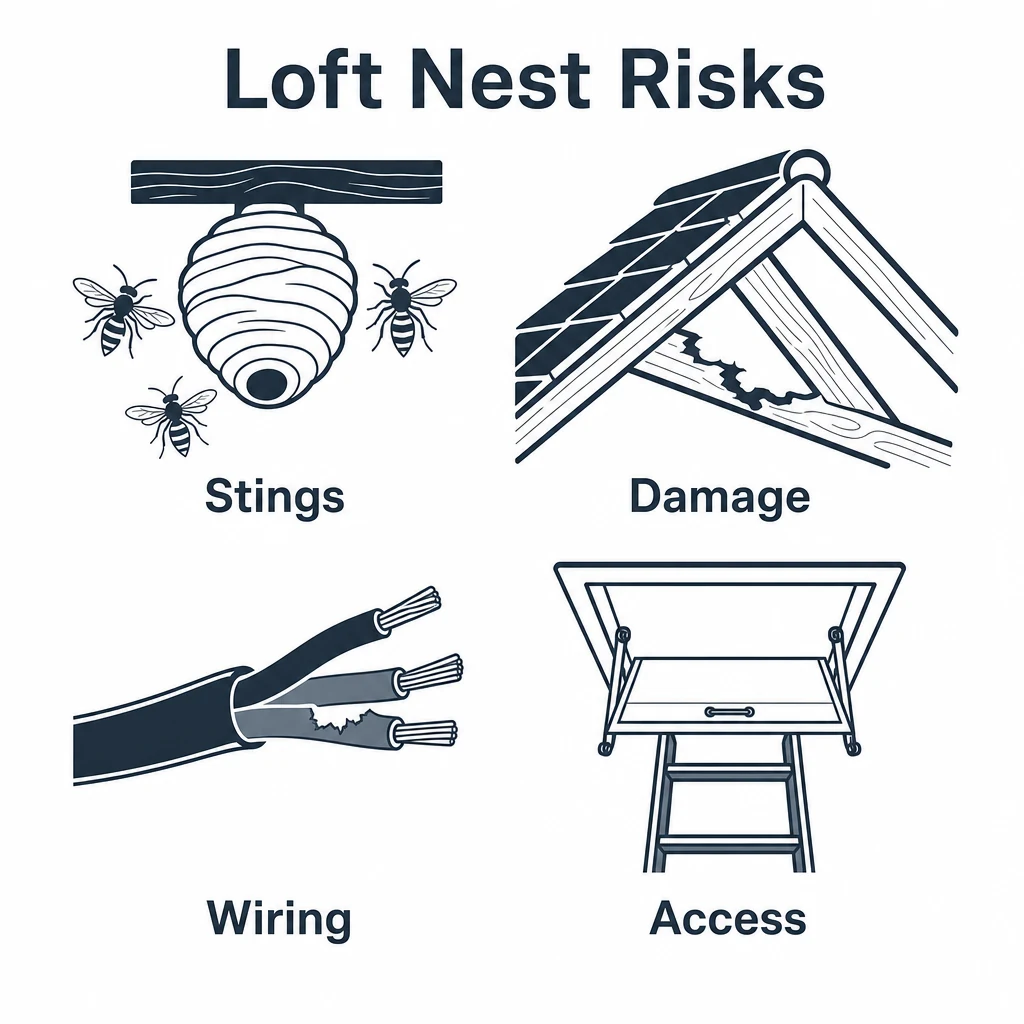
The main risk is not the nest material itself; it is the colony defending it. Wasps can become more reactive when the nest is disturbed, when vibration travels through ceiling boards, or when someone gets too close to their flight path. In a loft, that can happen accidentally.
Common problems include wasps entering rooms through light fittings, cracks, loft hatches or gaps around pipework. They may also gather around windows once inside, which can be unsettling in bedrooms and work-from-home spaces. For households with children, pets or anyone sensitive to stings, that repeated indoor activity is more than a nuisance.
Leaving a nest untreated can also make simple home tasks awkward. You may avoid storing items, inspecting insulation or dealing with other maintenance because the loft no longer feels safe to access. If wasps are active around an entrance point outside, people may also avoid opening windows, using nearby garden areas or standing near the eaves.
If you are unsure whether what you have seen is early nest-building or a mature colony, this guide on when wasps start building nests in the UK gives useful seasonal context.
Why waiting for the season to end is not always sensible
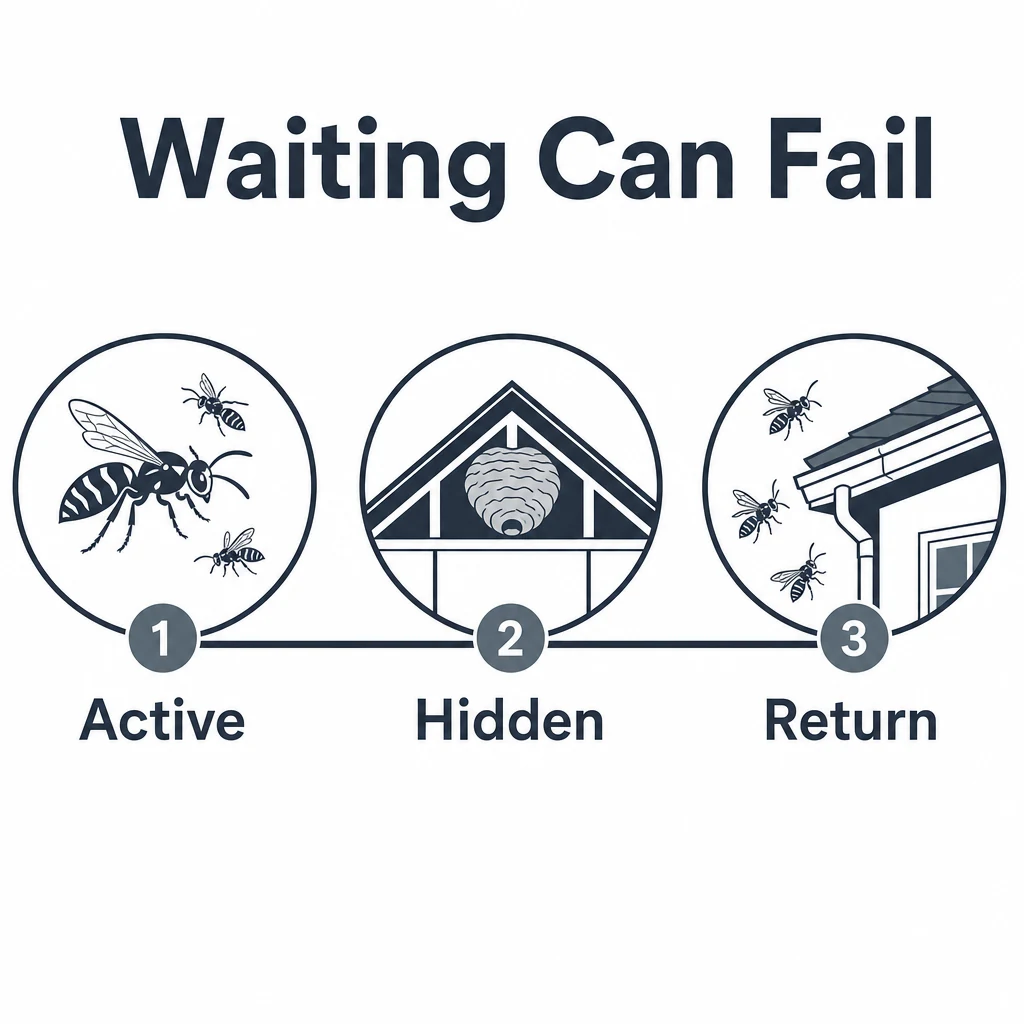
It is true that many wasp nests become inactive as colder weather arrives. However, that does not make waiting the best option when a nest is active in a loft. Depending on the time of year, you could still be living with weeks or months of wasp activity before the colony naturally declines.
During that period, the nest can continue to cause disruption. Wasps may keep finding their way indoors, activity at the roofline may increase, and the chance of accidental disturbance remains. Late-season wasps can also become more noticeable around food, bins and sweet drinks, which may make nearby doors, windows and outdoor areas less comfortable to use.
There is also a simple access issue. If you wait until the loft is urgently needed, you may discover the nest at exactly the wrong moment. Professional advice is useful because a technician can assess the activity, identify the likely entry point and treat the nest without you needing to climb into a confined space yourself.
For readers trying to understand wasp behaviour more generally, how long a wasp lives explains why individual wasps and the wider colony are not the same thing.
Why DIY loft treatment is risky
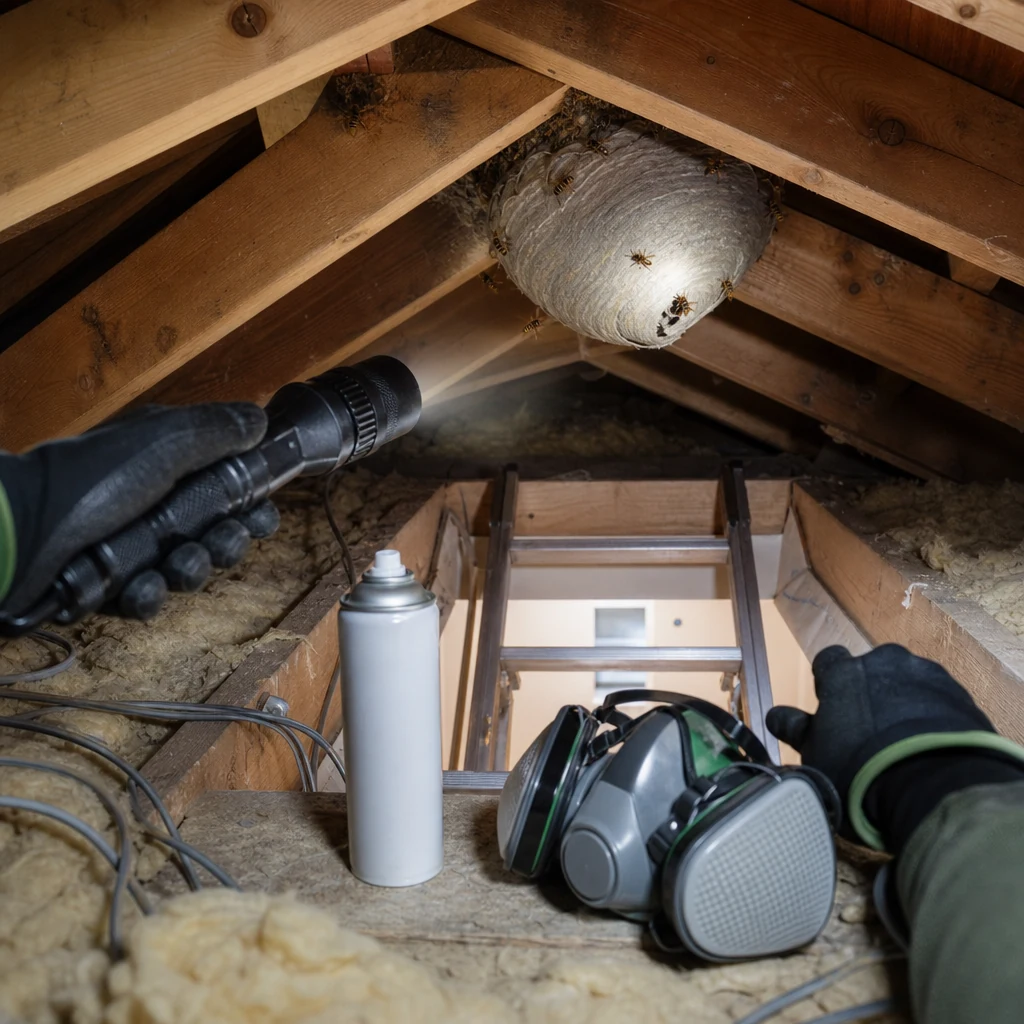
DIY wasp sprays can look like a quick answer, but a loft is one of the worst places to experiment. Access is awkward, footing may be poor, lighting is often limited, and you may be close to insulation, stored belongings and exposed timbers. If wasps react while you are on a ladder or moving between joists, the risk increases quickly.
The other problem is accuracy. The visible wasps are only part of the issue. Effective treatment depends on locating the nest or the correct access point and applying the right product in the right way. Spraying random gaps, blocking holes too early or disturbing the nest can push wasps into other parts of the property.
Blocking an entry point while the colony is still active is especially unhelpful. Wasps may search for another route out, and that route can sometimes be towards the interior. A calm, professional approach is safer because it deals with the colony first, then considers whether any proofing or repairs are appropriate afterwards.
If the insects are not wasps, treatment may be different. Bees, for example, should be identified correctly before action is taken. Your Pest Assassin also provides tree bee nest treatment where that is the more relevant issue.
What professional wasp nest treatment involves
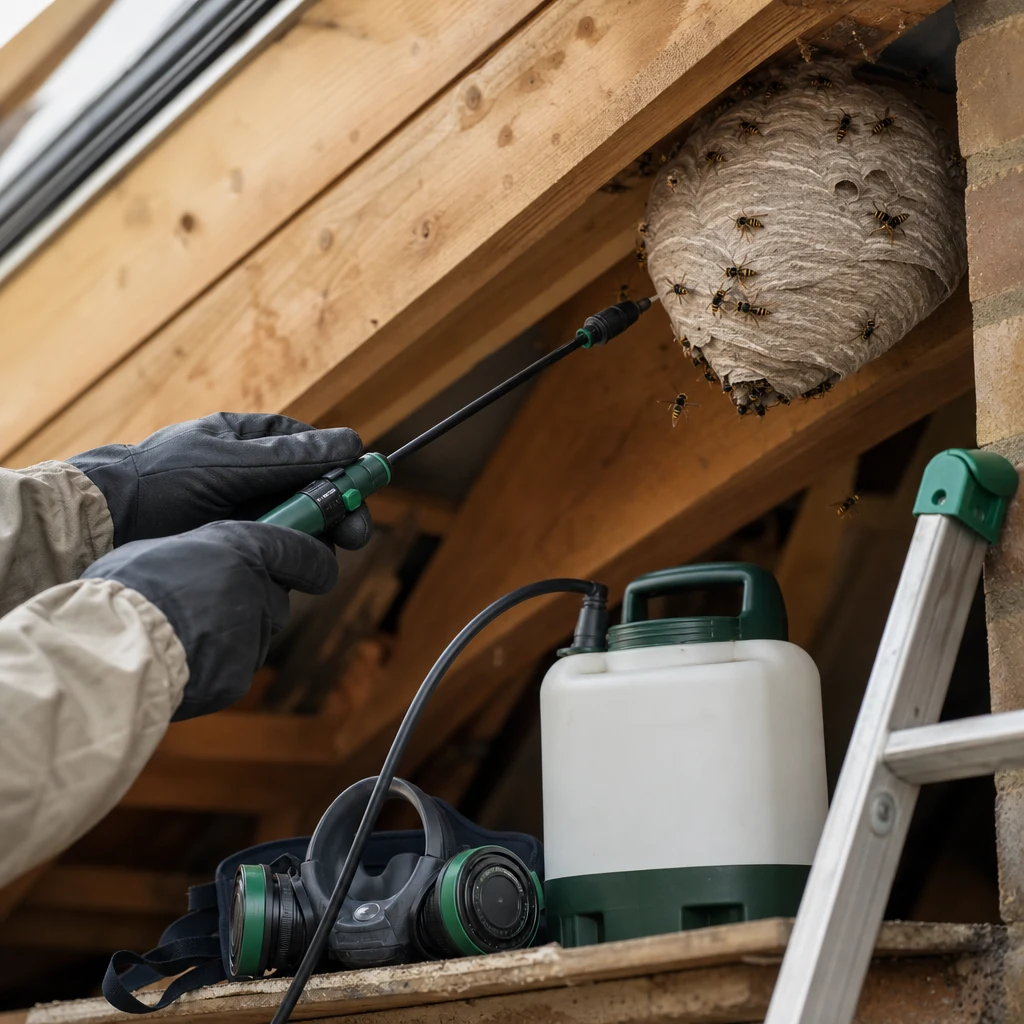
A professional visit starts with identification and assessment. The technician will look at where wasps are entering, how active the flight path is, and whether the nest appears to be in the loft, eaves, wall cavity or another sheltered space. This matters because treatment should be targeted, not guessed.
For loft nests, the technician may use suitable PPE, access equipment and professional-use products to treat the nest or entry area safely. In many cases, the priority is to stop the colony activity. Physical nest removal is not always needed immediately, especially if access is difficult, but the technician can advise based on the location and condition of the nest.
After treatment, wasp activity does not always stop the instant the product is applied. Returning foragers may still come back to the entry point for a short period. The important sign is that activity reduces and the nest is no longer being maintained. You should avoid disturbing the area until advised it is safe.
If you have steady wasp traffic around your roofline or wasps appearing indoors, arranging professional wasp nest treatment is the safest route. It gives you a clear answer on what is present, where it is, and how it should be dealt with.
Signs you should get the loft checked
You do not need to see the nest itself to take the issue seriously. In fact, many loft nests are first spotted from outside because wasps repeatedly use the same small gap in the roofline. A single wasp indoors is not proof of a nest, but repeated sightings around the same room or ceiling area deserve attention.
- Wasps flying in and out of one gap near the eaves, soffits or roof tiles.
- Buzzing or scratching sounds coming from above a ceiling.
- Wasps appearing upstairs, especially near windows or light fittings.
- Increased activity when the loft hatch is opened.
- Wasps gathering around a particular exterior wall, vent or gutter line.
If these signs are present, avoid opening the loft for a closer look unless you can do so safely from a distance. Do not poke the nest, shine lights directly into a suspected active area or seal entry holes while wasps are still using them.
- A loft wasp nest can lead to repeated wasp activity indoors and around the roofline.
- The biggest danger is accidental disturbance in a confined, awkward space.
- Waiting for colder weather may mean living with the problem for weeks or months.
- DIY sprays and blocked entry holes can make loft wasp problems harder to control.
- Professional treatment identifies the nest and deals with it in a safer, targeted way.
Frequently asked questions
Can I leave a wasp nest in my loft if I do not use the space?
It is not usually wise to ignore an active loft nest. Even if you rarely enter the loft, wasps may still come into living areas through gaps, light fittings or the loft hatch. The nest can also make future access unsafe.
Will a loft wasp nest go away by itself?
Many nests naturally decline when colder weather arrives, but an active nest can cause problems long before then. If wasps are entering your home or using a busy roofline gap, professional treatment is the safer option.
Should I block the hole where wasps are entering?
No. Blocking an active entrance can trap wasps and encourage them to find another route, sometimes into the property. The colony should be treated first, then any repairs or proofing can be considered afterwards.
Do I need the old nest removed after treatment?
Not always. Once activity has stopped, an old nest may be harmless if it is inaccessible and not causing an issue. A technician can advise whether removal is practical or necessary in your situation.
Need help with a loft wasp nest?
If you have wasps entering your loft, roofline or upstairs rooms, Your Pest Assassin can inspect the problem and recommend the right treatment. Get calm, practical help before the nest becomes harder to live with.