
You wipe the worktops, sweep the floor, put food away and think the problem is solved. Then, a few hours later, the same neat line of ants appears by the skirting board, sink or back door.
This does not mean your kitchen is dirty. It usually means the ants you can see are only the visible part of a much bigger colony problem, and cleaning alone has not interrupted what is happening behind the scenes.
Cleaning removes food, but not the colony
Good hygiene matters. Crumbs, sugary spills, pet food and sticky bins all make a kitchen more attractive to foraging ants. Removing these food sources can reduce activity and make your home less inviting.
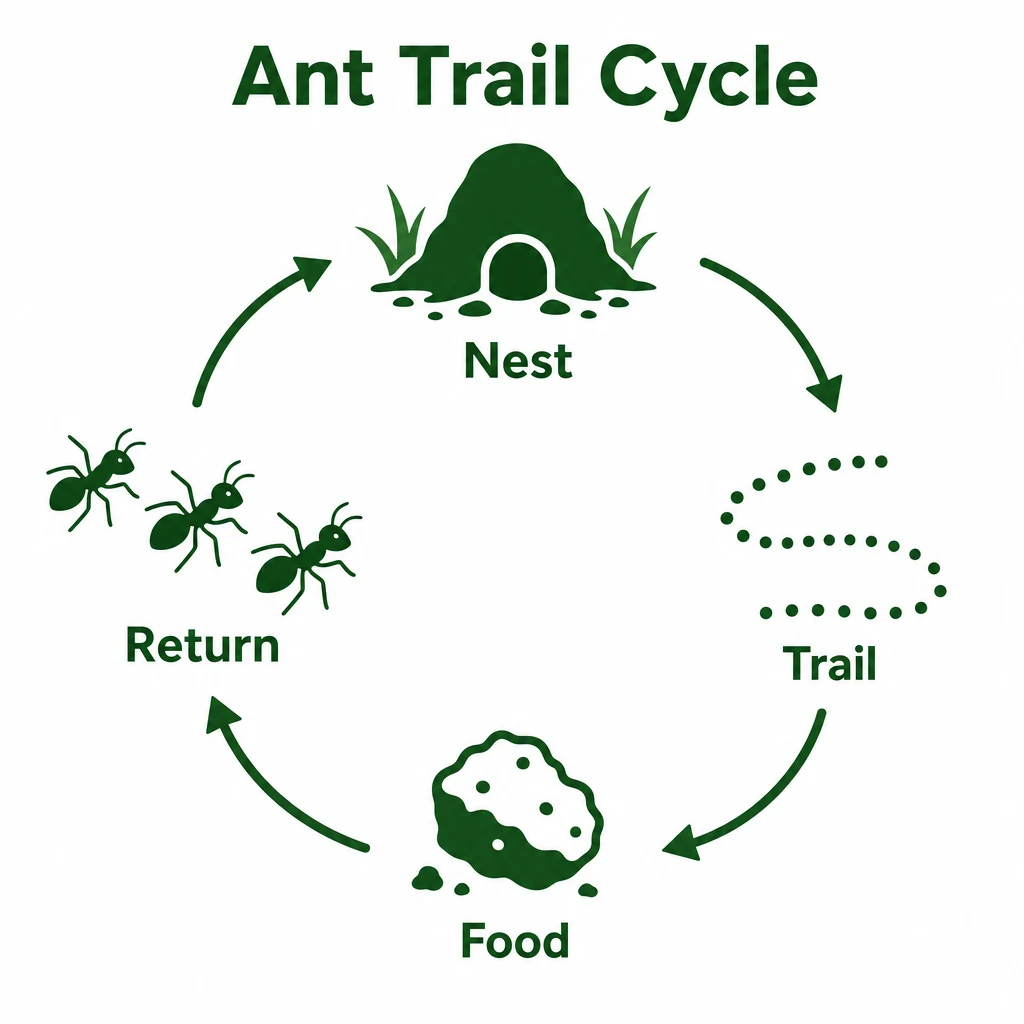
However, the ants on your worktop are usually worker ants. Their job is to leave the nest, search for food and return to feed the rest of the colony. The nest may be outdoors under paving, in soil, near wall cavities, beneath flooring or close to warm, sheltered parts of the building.
When you clean the surface, you may remove the food they found, but the colony still exists. More workers can be sent out, and if they find another route or another tiny food source, the trail begins again. This is why repeated wiping, mopping and household sprays can feel like a cycle rather than a solution.
How ant trails work
Ants are organised. When a worker finds a useful food source, it can leave a chemical scent trail, often called a pheromone trail, for other ants to follow. That is why you often see ants moving in a clear line rather than wandering randomly.
Kitchen cleaning can weaken these trails, especially if you clean the route thoroughly. But trails can be re-established quickly if ants are still entering from the same gap and the colony is still active. Even a small smear of jam, a few grains of sugar, grease around a cooker, or residue under an appliance can be enough to encourage renewed activity.
It is also common for ants to use hidden routes. They may travel behind units, through cracks around pipework, along cable holes, under door thresholds or behind kickboards. You may only see them once they reach the visible part of the kitchen, which makes the infestation seem smaller than it is.
For a long-term result, the aim is not simply to remove the ants you can see. The aim is to understand where they are entering, what they are feeding on, and how the colony can be treated in a targeted way.
Why DIY sprays can make repeat trails harder to solve
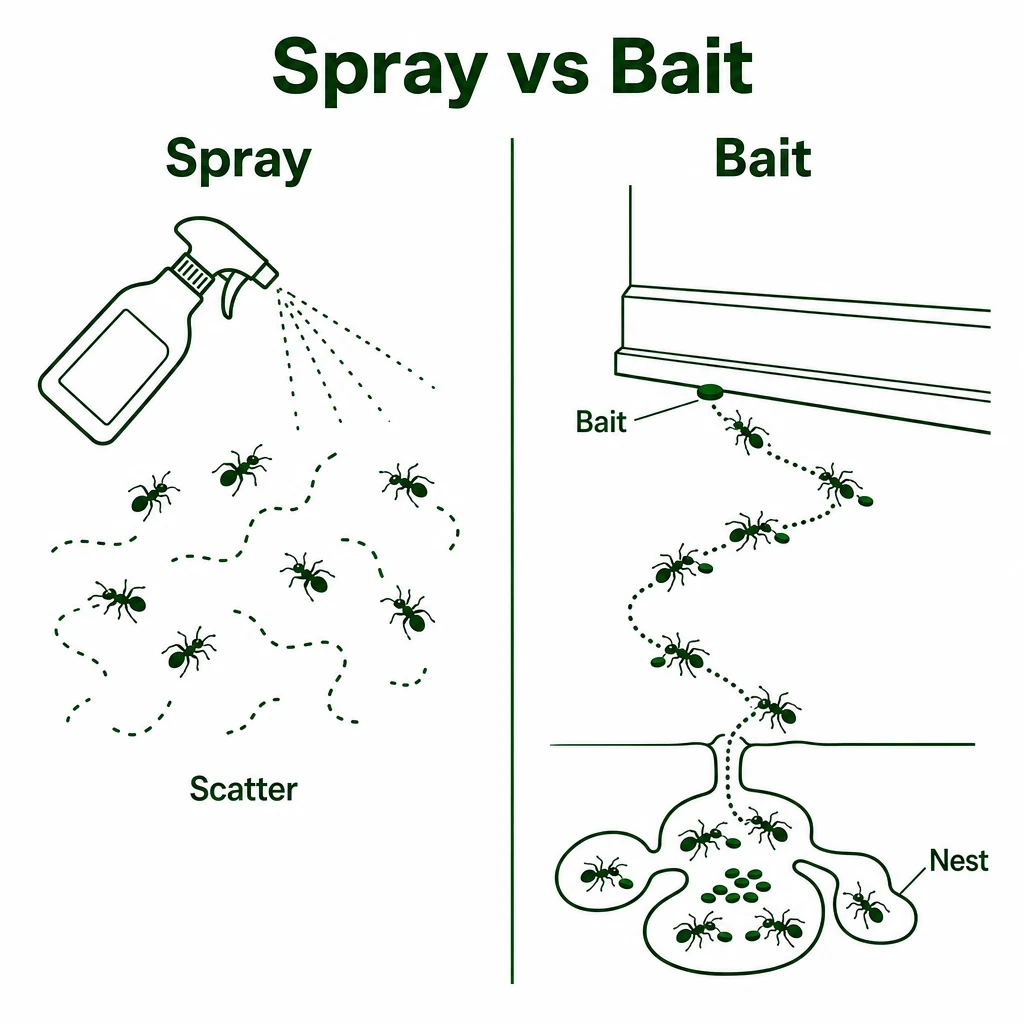
It is tempting to spray every visible ant, especially when they appear near food preparation areas. While this may kill some workers, it often fails to deal with the nest. In some situations, it can also scatter activity, making ants appear in new places.
Many household sprays act on contact. That means they affect the ants that walk through the product at that moment, but not necessarily the rest of the colony. If the queen and brood remain protected, replacement workers can continue foraging.
Another issue is misidentification. Different ant species and different infestation patterns need different approaches. What works for a simple outdoor trail may not be suitable for ants nesting in a sensitive indoor area. Some ant problems require careful bait placement, while others need external treatment, proofing advice or a combined approach.
Professional ant pest control focuses on identification, entry points and colony behaviour, not just visible insects on the surface. This is what helps prevent the same trail from returning again and again.
Common reasons ants keep coming back
If ants are returning after cleaning, one or more of the following factors is usually involved:
- A nest is nearby: Ants may be nesting close to the building and entering through tiny cracks or gaps.
- Food is hidden: Residue under appliances, inside cupboards, around bins or beneath pet bowls can continue to attract foragers.
- Moisture is available: Leaks, condensation, damp timber or wet cloths can make an area more appealing.
- Entry points remain open: Gaps around pipes, doors, vents and damaged sealant can allow repeated access.
- The trail was not fully disrupted: A quick wipe may remove visible dirt but leave enough scent for ants to relocate the route.
- The wrong treatment was used: Contact sprays may reduce numbers briefly without reaching the colony.
It is also worth checking whether the insects are definitely ants. Small kitchen pests can sometimes be confused at a glance. If you are seeing fast-moving insects at night, droppings, egg cases or activity around warm appliances, it may be sensible to consider cockroach pest control advice instead.
What a targeted ant treatment looks at
A good inspection starts with the pattern of activity. Where are the ants first appearing? Are they heading towards a food source, a water source or an external wall? Are they active at certain times, or after particular weather conditions? These details help identify the most likely nest location and route.
Targeted treatment may include professional-use bait, external treatment around entry points, advice on sealing gaps, and practical housekeeping steps to reduce attractants. The right method depends on the species, the layout of the property and whether the issue is in a home, food area, shared building or commercial premises.
Used correctly, bait can be especially useful because workers take it back towards the colony. This is very different from simply spraying visible ants. Placement matters, because bait should be positioned where ants are already travelling while being kept away from children, pets and food preparation surfaces.
Professional standards also matter. If you want to understand the training and compliance behind safe pest control work, Your Pest Assassin explains this on its certifications page.
How to reduce ant activity before help arrives
There are useful steps you can take straight away. Store open food in sealed containers, wipe sugary or greasy residues, rinse recycling, empty bins regularly and avoid leaving pet food down for long periods. Pull out movable appliances if safe to do so and clean beneath them.
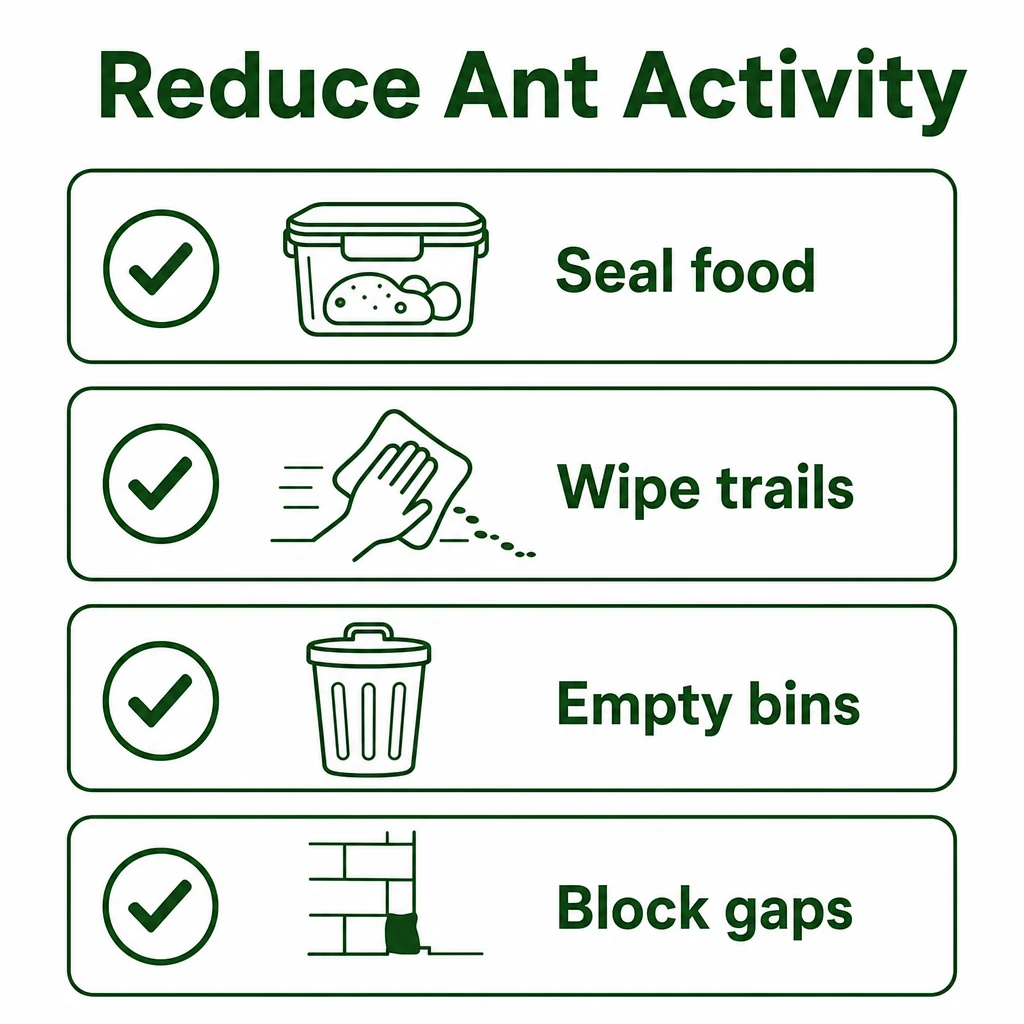
Use warm soapy water to wipe visible trails, then dry the area. Avoid overusing strong-smelling products across large areas, as this can sometimes push ants into alternative routes without addressing the source. If you can see where they are entering, make a note of it, but avoid sealing every gap before an inspection if it may hide useful evidence.
If you spot winged insects indoors, do not assume they are always flying ants. Some beneficial insects need a different approach. For example, honey bees should be handled carefully, and specialist honey bee removal may be more appropriate if bees are involved.
- Cleaning helps remove attractants, but it does not remove the nest or colony.
- Visible ants are usually worker ants following scent trails from a hidden source.
- Contact sprays may give short-term relief without stopping repeat activity.
- Correct identification and targeted treatment are key to lasting ant control.
Does seeing ants mean my kitchen is unhygienic?
No. Ants are attracted to tiny amounts of food, moisture and warmth. Even a well-kept kitchen can have ants if a nearby colony finds an entry point.
Will vinegar or household cleaner stop ants?
They can help disrupt scent trails temporarily, but they rarely deal with the nest. If the colony remains active, workers can return or create a new route.
Why do ants appear near the sink?
Sinks provide moisture, warmth and access points around pipework. Ants may also be feeding on residue in or around cupboards, bins and cleaning areas.
When should I call a pest control professional?
If ants keep returning, appear in several rooms, enter food areas, or you cannot find the source, a professional inspection can identify the species, route and best treatment.
Need help with returning ants?
If cleaning is not stopping the trails, Your Pest Assassin can identify the source and recommend a targeted ant treatment that suits your property.